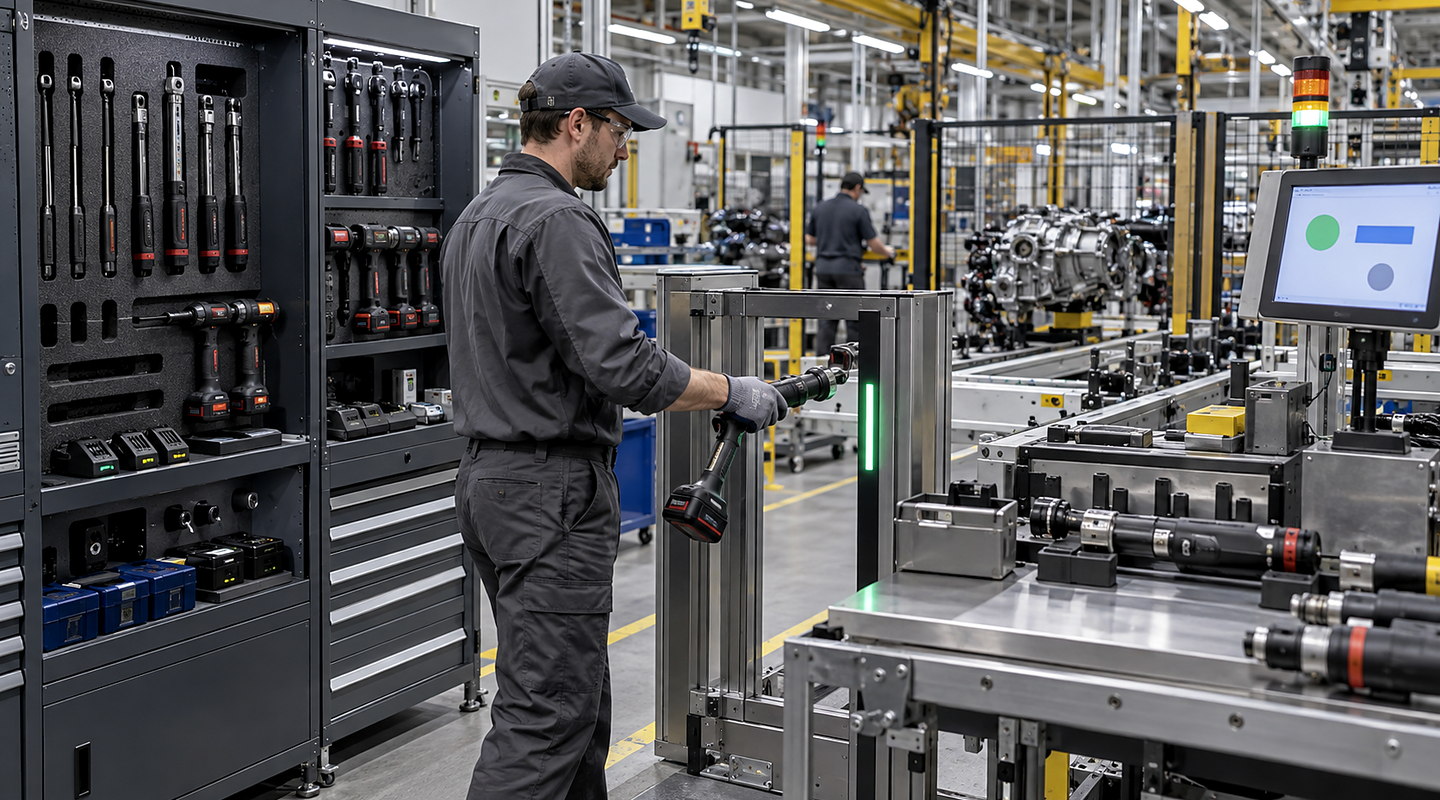
On-Metal RFID Tag Selection for Tools, Equipment and Returnable Assets
Plan on-metal RFID tag selection for tools, equipment and returnable assets around representative items, candidate tags or labels, final mounting positions and the intended reader arrangement, line connections, operating limits, acceptance checks and next steps.
In brief
For on-metal RFID tag selection for tools, equipment and returnable assets, start with representative items, candidate tags or labels, final mounting positions and the intended reader arrangement and your full operating sequence, then check material, orientation, neighbouring items, environment and lifecycle extremes before committing to a final layout.
Select on-metal RFID tags by asset material, mounting method, available space, environment, encoded identity and read conditions. Test candidate tags in their final position on representative metal assets.
On the production floor
Plan for the conditions your team handles every day — On-Metal RFID Tags
Select on-metal RFID tags by asset material, mounting method, available space, environment, encoded identity and read conditions. Test candidate tags in their final position on representative metal assets. For on-metal RFID tag selection for tools, equipment and returnable assets, the deciding details include asset material, curvature and available mounting area, frequency, memory and encoded asset identity and issue, replacement, removal and asset-record reconciliation.
Details worth resolving early for on-metal RFID tag selection for tools, equipment and returnable assets
Question 1
Asset Material, Curvature and Available Mounting Area
For on-metal RFID tag selection for tools, equipment and returnable assets, describe the current position, required outcome, acceptable limits and known exceptions for asset material, curvature and available mounting area. That lets us compare options against your real production rather than one nominal value.
Question 2
On-Metal Tag Construction, Stand-Off and Fixing Method
For on-metal RFID tag selection for tools, equipment and returnable assets, describe the current position, required outcome, acceptable limits and known exceptions for on-metal tag construction, stand-off and fixing method. That lets us compare options against your real production rather than one nominal value.
Question 3
Frequency, Memory and Encoded Asset Identity
For on-metal RFID tag selection for tools, equipment and returnable assets, describe the current position, required outcome, acceptable limits and known exceptions for frequency, memory and encoded asset identity. That lets us compare options against your real production rather than one nominal value.
Question 4
Reader, Antenna, Orientation and Required Verification Point
For on-metal RFID tag selection for tools, equipment and returnable assets, describe the current position, required outcome, acceptable limits and known exceptions for reader, antenna, orientation and required verification point. That lets us compare options against your real production rather than one nominal value.
Question 5
Impact, Temperature, Chemicals, Cleaning and Handling Lifecycle
For on-metal RFID tag selection for tools, equipment and returnable assets, describe the current position, required outcome, acceptable limits and known exceptions for impact, temperature, chemicals, cleaning and handling lifecycle. That lets us compare options against your real production rather than one nominal value.
Question 6
Issue, Replacement, Removal and Asset-Record Reconciliation
For on-metal RFID tag selection for tools, equipment and returnable assets, describe the current position, required outcome, acceptable limits and known exceptions for issue, replacement, removal and asset-record reconciliation. That lets us compare options against your real production rather than one nominal value.
Your operating cycle
Plan the complete label or tag lifecycle
For on-metal RFID tag selection for tools, equipment and returnable assets, include printing or issue, encoding, attachment, reading, handling, cleaning, replacement and reconciliation. A free-air read test does not represent the installed duty.
Representative items and final mounting
Encoding, attachment and verification
Environmental and handling lifecycle
Replacement and reconciliation records
Prove the result
Test on-metal RFID tag selection for tools, equipment and returnable assets against representative mounted tags or labels and difficult read and lifecycle conditions
Mounted samples
Test representative items covering asset material, curvature and available mounting area in the final mounting position.
Lifecycle exposure
Challenge on-metal tag construction, stand-off and fixing method through the intended handling, environment and cleaning conditions.
Read and record
Verify reads at the required point and retain the encoding, replacement and reconciliation evidence for issue, replacement, removal and asset-record reconciliation.
Important limits
Be clear about what the trial has shown
A tag tested away from metal does not represent its installed performance.
Fasteners, adhesive, recesses and neighbouring metal can change orientation and read behaviour.
Final reliability depends on the complete tag, mounting, reader and operating process.
Plan the asset read point and exception process before issuing tags
Choose and position a durable on-metal RFID tag that can be fixed to the real asset and read at the required verification points throughout service.
Evidence to compare
Define where an asset must be read, expected orientation and movement, missed-read handling and manual fallback.
Production condition
Separate tag readability from asset-record accuracy.
Acceptance decision
Include replacement, removal, reassignment and duplicate-identity controls.
The quotation brief should record impact, temperature, chemicals, cleaning and service lifecycle and identity issue, replacement, removal and reconciliation process. Final suitability remains specific to the samples, line conditions and acceptance tests agreed for your project.